
Why Nonprofit Networks Should Act Like Movements
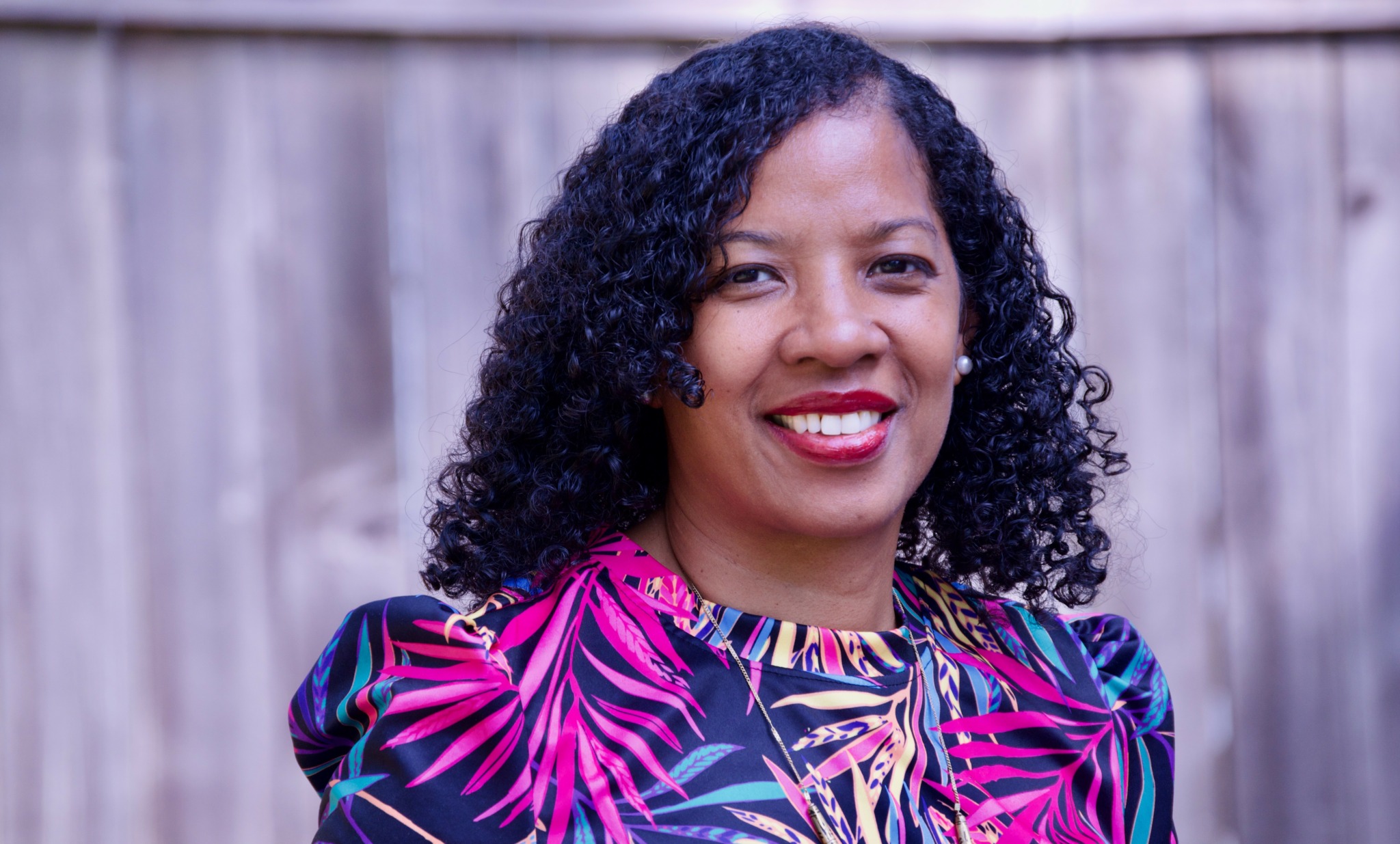
By Malaika Cheney-Coker

What could I say about strengthening nonprofit networks that was bold enough for the moment, yet sober-eyed about the limits of non-profits’ collective power? I needed to figure this out for a talk I had been invited to give a talk on the topic at the National Council of Nonprofits' annual conference in June. The following abbreviated version of my remarks attempts to straddle these and other rhetorical difficulties in a time of both heightened anxiety and opportunity for nonprofits:
A lot has been said about what individual nonprofits can do to reverse declining public trust. I'm here to focus on what nonprofit networks can do. My main advice is to restore trust by behaving more like movements—in three interconnected ways:
The first is to be a third space. Movements are containers for a great diversity of individuals and groups, each bringing their own creative energy. Nonprofit networks can invite more civic and community groups into their terrain, creating a vast infrastructure for collective action.
Picture a small local park in my neighborhood—let's call it WildWoods Park—that inspires fierce devotees among the locals. (This is partially based on real events). They form a Friends of WildWoods group. A resident who works at a nonprofit dedicated to stewarding the city's parks connects them to grant funding and training. When that resident moves away (and this part is purely hypothetical), Friends of WildWoods feels less connected—until they join a local nonprofit coalition's webinars, hear from county officials, and learn about other neighborhood groups. But, their trust, their connection to a broader ecosystem, depends on whether the nonprofit coalition extended an invitation to belong.
The second piece of advice is for nonprofit networks to act as a seedbed for new models. While networks are great for exchanging learning, movements direct that learning toward change.
My team worked with a nonprofit client experimenting with community governance: an advisory board of locals put in charge of $25,000, with stipends, training, and support. Did the model build trust? Yes! It created deeper dialogues and unanticipated insights into how and why the nonprofit should change that particular program. Was the experience bursting with lessons, such as just how much training was required to bring board members up to speed with the workings of a complex nonprofit? Of course. But the nonprofit believed that sharing more power with communities is the future, and was willing to take risks to be harbingers of that future. I deliberately chose an example focused on building trust. But the general idea is to harvest new models that meet the moment, whether on nonprofit mergers, on AI deployment, or on bipartisan advocacy. I imagine a world fair orchestrated by nonprofit networks—a noisy, exuberant exposition of ideas directed at a single purpose—enabling nonprofits to thrive in the now and fashion the future.
The third piece of advice is to lead with imagination. Whereas networks are often held together by homophily—"birds of a feather stick together"—movements bring unlikely bedfellows together through vision and imagination. In a time of failing and faltering systems, movements can project broader ideas and imaginations that lift up entire sections of society.
Metaphors work really well as imagination devices. For example, let's locate innovation not only in Silicon Valley but in a vast People's Plain, where the role of citizens is not only the ballot box but the active creation of civic and social innovation. Despite its seeming stillness, the prairie is one of the most dynamic ecosystems on earth—fungal networks thread through the soil, connecting and brokering the sharing of resources among tens of thousands of root systems. As with the prairie, under the open sky of democratic life, constant, turbulent, teeming innovation is happening within the ground, shaped by millions of citizens. For example, participatory budgeting has spread across 64 cities and counties in red and blue states. Community land trust models have spread to places as disparate as the Bronx, Fort Worth, and San Francisco. Imagination builds trust by saying to the public: we hear you that your deepest fear may not be current deprivation but that there is no bridge to a better future.
Of course there are practical constraints to imagination. The client with the advisory board could act boldly because of flexible funding from a MacKenzie Scott grant. Sound depressingly familiar? Real constraints exist. But so do our power and agency. Early in my career, I had a front row seat to how money can follow imagination. I was working in the emergency and humanitarian assistance unit at CARE USA, one of the world’s largest NGOs. At the time, humanitarian interventions in disaster hotspots suffered a grievous lack of coordination. Large INGOs would show up in the same places, sometimes replicating the same services and failing to share valuable information.
Our director imagined not only a more coordinated approach but an ongoing capacity-strengthening relationship between these large INGOs. It was a vision that proved compelling to the Gates Foundation that provided several millions to fund the initiative over multiple years. Money can follow imagination.
While there's no one blueprint for restoring trust with the public, nonprofits that act like movements will have multiple doors for doing so: through being a third space for relationships, through seeding the models that midwife the new, and through leading with imagination. As they do this, they'll come into their power. And they'll bring more people into the ongoing project of building a better society.


Comments