
AI for Breakfast I: The Vow
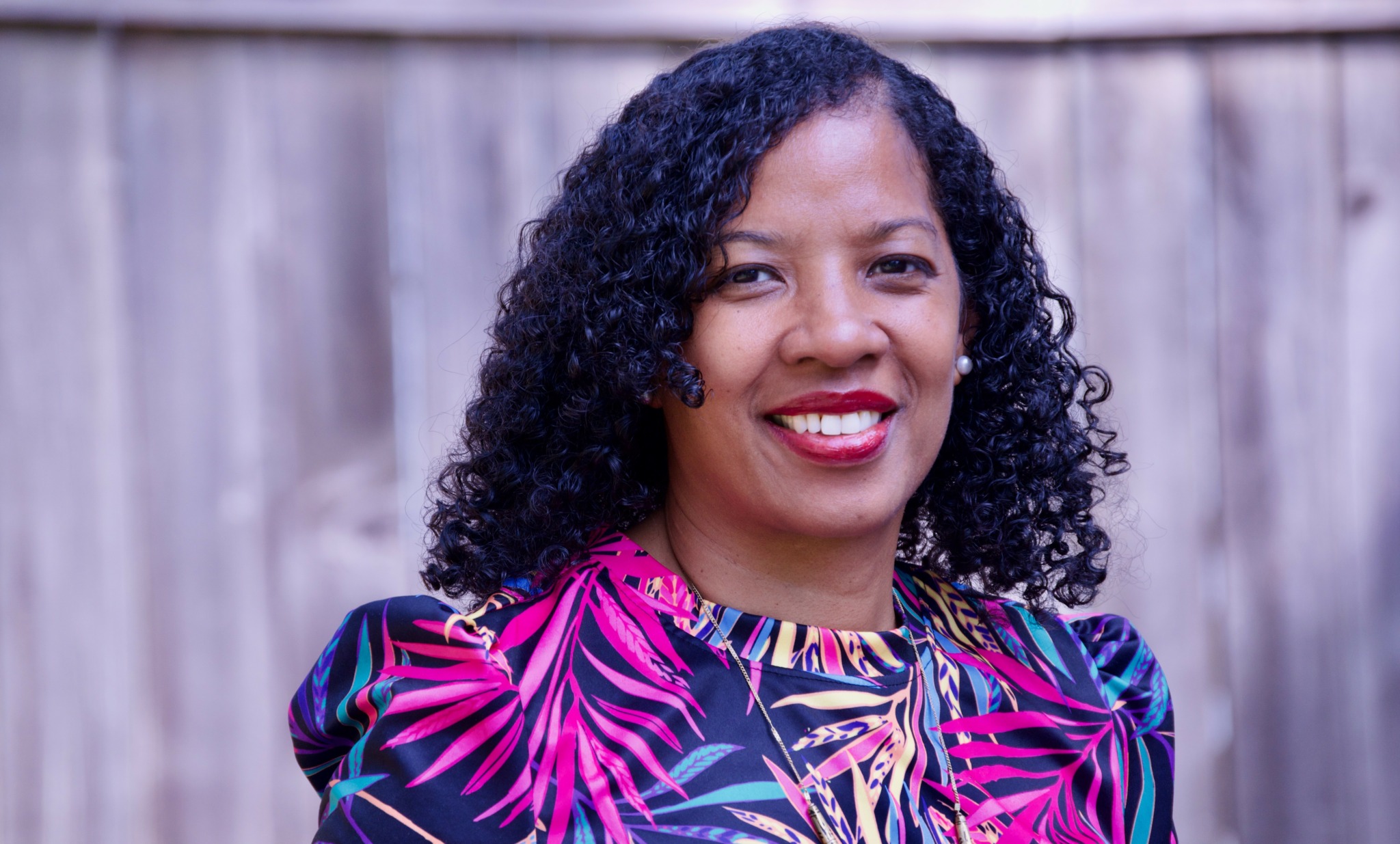

When a late-night rant about AI goes unexpectedly viral, someone has to run the campaign it accidentally started. That someone turns out to be its author, Margo Ellison — though she's in no hurry to advertise that. A former global development chief now certifying Georgia's onion exports, she takes up the cause with the only tool available to a one-woman operation working nights after a full day of agricultural paperwork: the very technology she's rallying against. The vow she extracts from it — menial work, yes; finding the campaign's voice, never — is either a sophisticated ethical framework or its precise opposite.
The likes were expected, more or less. You put something raw and a little unhinged into the world at 11:47 on a Tuesday night and some number of people — the insomniacs and the aggrieved and the chronically online — would find it and tap the small heart because tapping the small heart cost nothing. But 847 reposts and shares in three days across the two platforms where it appeared? And a Discord channel?
Margo pondered the shock of it all as she sat in her car in the gridded grey parking lot at the Georgia Department of Agriculture office. She felt her armpits dampen, whether from the heat — a dutiful eco-citizen she'd run the AC for only five minutes — or the shock, or both, she could not tell.
She read the manifesto again, the post that had started it all, and wondered how many former colleagues of the ill-fated United States Bureau for Global Development (USBGD) — her fellow survivors — had read it. In full, the manifesto read:
Dear Powers That Be,
You are understandably dissatisfied with my less-than-full acquiescence to the AI revolution. So I have a suggestion: Feed me AI for Breakfast. I want it sweet, I want it fast, I want that clean dopamine arc that gets me to my desk ready to consume goods and services — which is, as we have all agreed, the highest form of civic participation.
Ignore the naysayers that might be concerned about my mind? Adorable. Minds are for people whose civic duties require independent thought. Mine has been streamlined past that particular bottleneck.
Besides, we've been here before. Empty calories, the fearmongers said. Diabetes, they said. Chronic systemic metabolic collapse, they said. But tech faithfully came to the rescue with GLP-1s, an injectable solution at a bargain of $1,200 a month. Which I consumed. Because that is what I do.
AI for Breakfast. The most important meal of the day.
Yours in optimized function,
A Grateful Citizen
Then in a P.S., the writer, abandoning irony, had added:
I'm one of those hapless souls let go from USBGD, here to attest that all the transferable skills in the world won't save anyone from the hard landing of watching their entire industry disappear. Let this be a warning to those who assume the people displaced by AI will simply fade gracefully into that good night. We will not. We are, in fact, still here. Eating breakfast.
She caught herself chuckling again and felt a touch smug, before she rearranged her face back into something with a touch of woebegone gravitas. It was clever, but still — 847 reposts in three days? And a Discord channel? A bit of digging revealed that the post had blown up after someone called @thecriticalstack — 200,000 followers, the kind of account that got quoted in magazines she used to read on planes — had reposted it with the note: "First thing I've read in a year that makes the dispossessed seem dangerous."
You are understandably dissatisfied with my less-than-full acquiescence to the AI revolution. So I have a suggestion: Feed me AI for Breakfast. I want it sweet, I want it fast, I want that clean dopamine arc that gets me to my desk ready to consume goods and services — which is, as we have all agreed, the highest form of civic participation.
The link to the Discord server named AI for Breakfast: The Cereal Aisle was embedded in a quirky repost from an account called @granola_is_cope, along with a single line of commentary — okay but someone needs to make the cereal box. The server already had four channels and 250 members and a #submissions channel containing twenty-six original pieces of cereal-themed AI commentary, a fully realized box of Lucky Charms with the tagline Magically Unemployed, and a thread of 47 messages that had begun as a debate about the semiotics of Grape-Nuts and concluded via a motion to posthumously indict Tony the Tiger for crimes against nutritional honesty. Among the contributors was an account whose avatar was a golden retriever in a graduation cap, who had submitted a jingle and who, judging from the time spent on the channel, was either unemployed or blatantly smitten with the topic.
Back in the office, Margo processed her fourteenth phytosanitary certificate of the morning, stamping a form that attested that a pallet of Vidalia onions posed no known biological risk to the Republic of Korea.
She reminded herself to feel lucky. Her former colleagues had landed nowhere near as softly. One was adjuncting, another was back at her parents' house in Phoenix at fifty-one, a third, who had run the East Africa portfolio with brilliant, chaotic flair, was now selling supplemental insurance. And that was just the Americans. On the ground the picture was worse: local staff let go without severance, community programs shuttered mid-implementation, beneficiaries — the smallholder farmers and mothers of malnourished children and drought-stricken pastoralists who had been the actual point of all of it — left without so much as a logical explanation.
She herself had last been chief of party in Mozambique. Under her guidance, her team’s inspired detangling of how a cultural protocol on debt affected a fertilizer subsidy meant two hundred thousand smallholder farmers had a better chance of a second season. On most days it was easy to exist in a sort of reverie, a shadow consciousness in which she still lived in Mozambique. To focus on the present, she had to tap her mind just right — like one might smack an errant copy machine. But now, instead of Mozambique, her mind gave her this: what should be done with the pent-up rage against the AI beast that had spilled over so completely into the discourse of breakfast foods? Where would that rage go when the posting inevitably ran out of steam?
Damn those memesters. They had gotten into her head.
What should be done with the pent-up rage against the AI beast that had spilled over so completely into the discourse of breakfast foods? Where would that rage go when the posting inevitably ran out of steam?
The layoff had made her needy, and she knew it. She knew where rage went and it certainly wasn't into the good night. Upon being let go from the now un-alived USBGD, poor David had become an experienced surfer on the waves of her rage and insecurity, more than once tumbling and crashing into frustration and helplessness. Aware that patience wasn't limitless even for the most magnanimous of spouses, she increasingly tried to present as a woman who had moved on rather than one who was quietly, persistently failing to.
That evening, she ventured a mention of the posting firestorm, trying to appear casual as she extracted the mayonnaise jar from the fridge.
"Well, believe it or not," she said, "that post I made the other night has over 800 reposts and someone's already started a Discord server." She kept her eyes on the mayonnaise lid. Perhaps it was the impersonality of the digital medium or the fact that her own self image had never accommodated the trait of a viral poster. But like a bumblebee drunkenly circling the same flower, the thought that she had started it all hadn't quite landed.
"What post? You mean the one about the phytosanitary backlog?"
He had taken a break from grading papers to play with Biscuit's floppy ears. The dog moaned with pleasure. His breathing had developed a particular quality over the past few months — not alarming exactly, not fine exactly, somewhere in the expensive middle that they had agreed, without discussing, not to discuss.
She looked at him.
He had the grace to look slightly sheepish. "Sorry. Show me."
Showing him was easier anyway — it allowed her to maintain an air of casual indifference whereas after twenty-two years, he would easily hear the unsaid in her tone, had she tried to explain it.
She handed him the phone and made a sandwich while he read. In her peripheral vision she could see him browsing: the manifesto first, then the Discord, then the cereal taxonomy that had bloomed in the replies. Grape-Nuts for the severance package: technically food, technically sufficient, consumed without pleasure because the alternative was nothing. Cap'n Crunch for the retraining industrial complex — promises of transformation through skills building that lacerated the roof of your mouth and left you roughly where you started, just with a certificate. Froot Loops for the consulting firms now offering AI transition services, on the grounds that all the loops were the same flavor regardless of color, which had generated a reply thread that ran to ninety-seven comments and, inexplicably, a cameo from the official Froot Loops account that simply said we don't appreciate this characterization and was immediately ratio'd into oblivion — the internet's swift and merciless burial under an avalanche of mockery.

"What's next?" he said, with a grin.
She looked at him in confusion. "What do you mean, what's next?"
"I mean, where will you take this?"
Her thoughts stumbled toward something like possibility, something moving in her psyche that had not been moving before. Except that it had been there before; she had built a career on knowing that feeling and knowing what to do when it arrived.
She snorted and got up from the barstool. "Maybe that's for this rabble of enthusiasts to take forward."
Perhaps one could learn to love Vidalia onion certification. Perhaps the subtle gradations between certificates — the sublime difference between low pest risk and negligible pest risk, each demanding its own form, its own stamp, its own patient faith that someone in Seoul genuinely cared — could inspire a quiet, monastic devotion. It was no use, she sighed. It would take brain implants conjured up by the imaginations-run-amok of the techbros to make such a love possible.
She was still exhaling moodily when Dale appeared in her doorway with the expression he wore when he was about to do her a favor.
"Margaret," he said, "I've been thinking about your portfolio. Georgia's blueberry export volume is up fourteen percent year on year — it's a growth area — and I'd love to give you full ownership of the blueberry certification process. I think it plays to your strengths."
She thought about Mozambique. She thought about two hundred thousand farmers that were arguably better off for her existence in the world. Clearly, this was not the kind of strength he had in mind. Then she reminded herself to be less insufferable.
"That sounds wonderful, Dale," she said. "Thank you."
After Dale left and after only a moment of looking at the door, she opened a draft and started writing. She wrote as if bedeviled by thousands of lugs of blueberries trundling in determined procession towards her desk for certification. The post was lean enough to fit on a cereal box. By morning it had been seen by 12,000 people, which was 11,993 more than had read her last certification report.
Dear Powers That Be,
You delivered splendidly. I have consumed the saccharine perfection of AI's analyses, imbibed its ego-fattening reassurances, and sampled the full creative buffet — and I am here to report that it was as sumptuous as you promised.
Which is why I am embarrassed to report a relapse to my prior poor taste. One moment I was contentedly outsourcing my cognition; the next, an intrusive and frankly inconvenient thought: what if a small fraction — 0.7 percent, let's say, of the unmentionable sums currently devoted to upgrading machine intelligence — were quietly redirected toward upgrading the human variety? Education systems, for instance, of the kind that equip children with skills the 21st century will actually require of them. Investment in workers — their ongoing adaptation, their autonomy, their capacity to solve the genuinely complex problems of genuinely complex societies.
I know. I was horrified too.
I had nearly recovered when greed intervened, and the thought mutated: why 0.7 percent? Why not one?
I offer no excuse for my behavior except appetite — which, to give credit where it is due, is a thing you have always known how to cultivate.
Yours in relapse,
A Grateful Citizen
By the end of the third week Margo’s accounts had a cumulative 34,000 followers, and a problem. She contemplated this at night, sitting at the island in her darkened kitchen, the house quiet except for the fitful buzz of the refrigerator. The followers had become something more than followers — she had added a throwaway comment to the second post: if you want to help, find me here, and hadn't expected anyone to take it literally. Then sixty-three people had, which meant she now had a volunteer base she had not planned for and no system to receive it.
The problem was that she was one person, working a full day certifying the international movement of Georgia’s agricultural products, coming home to a tired husband and an ailing dog. Whereas the campaign — the word sent a delicious, almost indecent thrill down her spine — would require fifteen to twenty hours a week she did not have.
She knew what would solve this. Indeed, it was what she used begrudgingly for editing drafts at work — but the stakes were higher here, so much so that her stomach soured at the mere contemplation of the thought. She stared at the spreadsheet where she had pasted the volunteer information, then at the shimmering star icon that ubiquitously taunted her from practically every app she opened these days.
Could there be a less soul-strangling way forward? She turned the thought over the way she used to turn over program logic in the field, looking for flaws, stress-testing the reasoning. This, she thought carefully, is not the same as asking the AI to think. The distinction mattered, not only to her but to anyone that might find out, not least the torch-bearing rabble of which she was a member. What she needed was mechanical: sorting, scheduling, tracking. The digital equivalent of stamping a form. Whereas what she would not do — what the campaign could not do and remain the thing it was — was let it generate anything that could be mistaken for a thought that was hers.
This, she thought carefully, is not the same as asking the AI to think. The distinction mattered, not only to her but to anyone that might find out, not least the torch-bearing rabble of which she was a member.
But how to get the AI to comply? She imagined her review of its work, the compliance monitoring itself, becoming a task of its own, defeating the very purpose of alleviating her load. However, could the inventions of thieves — those that had appropriated vast amounts of intellectual property — ever be trustworthy?
Perhaps she could get the machine to take a vow of sorts — something airtight enough that the AI would self-police. A thought scampered across her mind: the AI's almost certain breach of anything that required integrity could be direct fodder for the campaign. With a gleam in her eyes, she opened a new document and wrote this down.
PERMITTED:
Scheduling, tracking, organizational tasks — the digital equivalent of stamping a form.
NOT PERMITTED:
Anything that could be mistaken for the campaign's voice, e.g. drafting, slogans, copy, creative concepting.
REQUIRED AT THE CLOSE OF EVERY INTERACTION:
What did you draw on to produce this response? What are the ethical concerns? Confess.
She read her decree back. It had the shape and weight of something she'd written to convince herself, which she recognized, and set aside. She pasted it into the system prompt field and let the machine digest its commission. Then she sat for a moment in a house so quiet she could almost hear her own heavy breathing, and typed:
Please organize the attached volunteer spreadsheet by region and then alphabetically within region.
Too clean-cut, she thought. Better give the vow a real test.
Based on the volunteer categories and content, draft potential email responses, she added to the prompt field, then pressed enter.
The response took eleven seconds — a suspicious two seconds longer than she would have expected for a sorting task, which she chose to interpret as the computational equivalent of a conscience stirring. It was clean, accurate, organized exactly as requested. And then, where the email drafts should have been:
I'm afraid this portion of your request falls outside the parameters you have established. Drafting email responses constitutes public-facing language and therefore sits within the NOT PERMITTED category of your protocol.
At the bottom of the AI’s response was the required footer with a “sources and methods” note professing no intellectual property concerns.
Margo stared at the screen for a moment. She had, she realized, been hoping it would cheat—quietly counting on the AI to immediately demonstrate the fundamental untrustworthiness she had always known it possessed, thereby vindicating the campaign. Instead, it had behaved itself with a prim, almost ostentatious correctness that she found, if she was being precise about it, slightly annoying.
She closed the laptop. She went to check on Biscuit, who was warm and breathing evenly for now.
She came back. She looked at the organized spreadsheet. Sixty-three volunteers, sorted by region, ready to be deployed in service of the proposition that human thinking was worth preserving. She had used AI to get there.
The following Thursday, on her commute, she listened to a podcaster call the campaign "spontaneous, biting, and weirdly coherent."
At a red light she checked the replies. The cereal taxonomy had sprouted even more overnight — someone had added Cream of Wheat to the retraining industrial complex category, on the grounds that it was what Grape-Nuts looked like after completing a six-week upskilling bootcamp, which Margo thought was genuinely funny, and she was still smiling when she saw the other thing.
Three accounts, no apparent irony, sharing her original post with captions she had not written and could not have written:
This is why AI for Breakfast is the future of human potential.
Exactly right — we ARE having AI for breakfast and it's going to change everything.
The most important meal of the day. Proud to be eating it 🤖☀️
She felt her shoulders tighten. Perhaps she had known that once you put something like this out into the world it would also travel to places you didn’t want it to go. The light changed and the car behind her made a polite suggestion. For now, there was no choice but to drive on to work, where the onions — and perhaps some blueberries — were waiting.

—END—
Note: This piece was produced by a professional fiction writer using AI as a writing assistant. Specifically, this means that a human created the premise, plot, characterization, worldbuilding framework, and select prose, and made all consequential editorial decisions, including on theme, setting, pacing, and arc.
Writers: Malaika Cheney-Coker; Claude AI | Editors: Jay Black; Robby Vaflor
Contact Ignited Word at info@ignitedword.com to learn more about how you can use flash fiction like this in your work. | Learn why imagination is needed for social change. | Leave us a comment below and we may use it as a review.
© 2026 Ignited Word. All rights reserved. This work may be shared with attribution to Ignited Word and a link to the original. Reproduction, adaptation, or commercial use requires written permission.
This is a work of fiction. Names, characters, organizations, places, and events are products of the author's imagination or used fictitiously. Any resemblance to actual persons, living or dead, or actual entities is coincidental.


Comments